

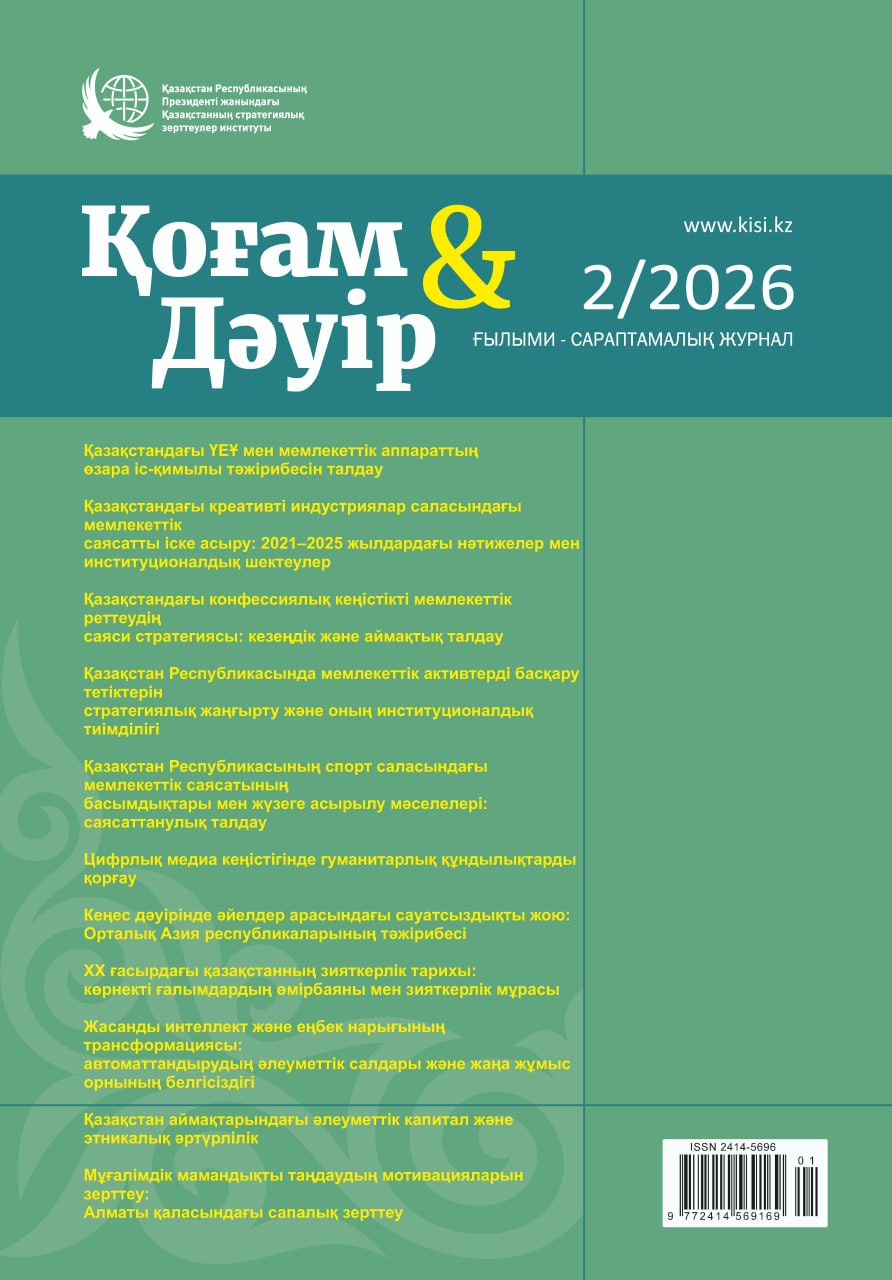
Keywords
How to Cite
Abstract
This article examines the evolution, institutionalization, and practical outcomes of the interaction between state authorities and non-governmental organizations (NGOs) since Kazakhstan gained independence. Using a qualitative approach to public policy analysis, the study explores the legislative framework, conceptual state documents, civil forums, and funding mechanisms that have shaped the development of the third sector. The findings indicate that a relatively stable model of partnership between the state and NGOs has been established in Kazakhstan, implemented through formal support instruments and advisory platforms. At the same time, systemic problems persist, such as regional disparities in NGO development, formalism in participation, and limited evaluation of the quality of services provided by NGOs. The article contributes to the understanding of civil society development in post-Soviet countries and provides practical recommendations for strengthening inclusive governance in the advancement of the third sector.