

Keywords
How to Cite
Abstract
Abstract.
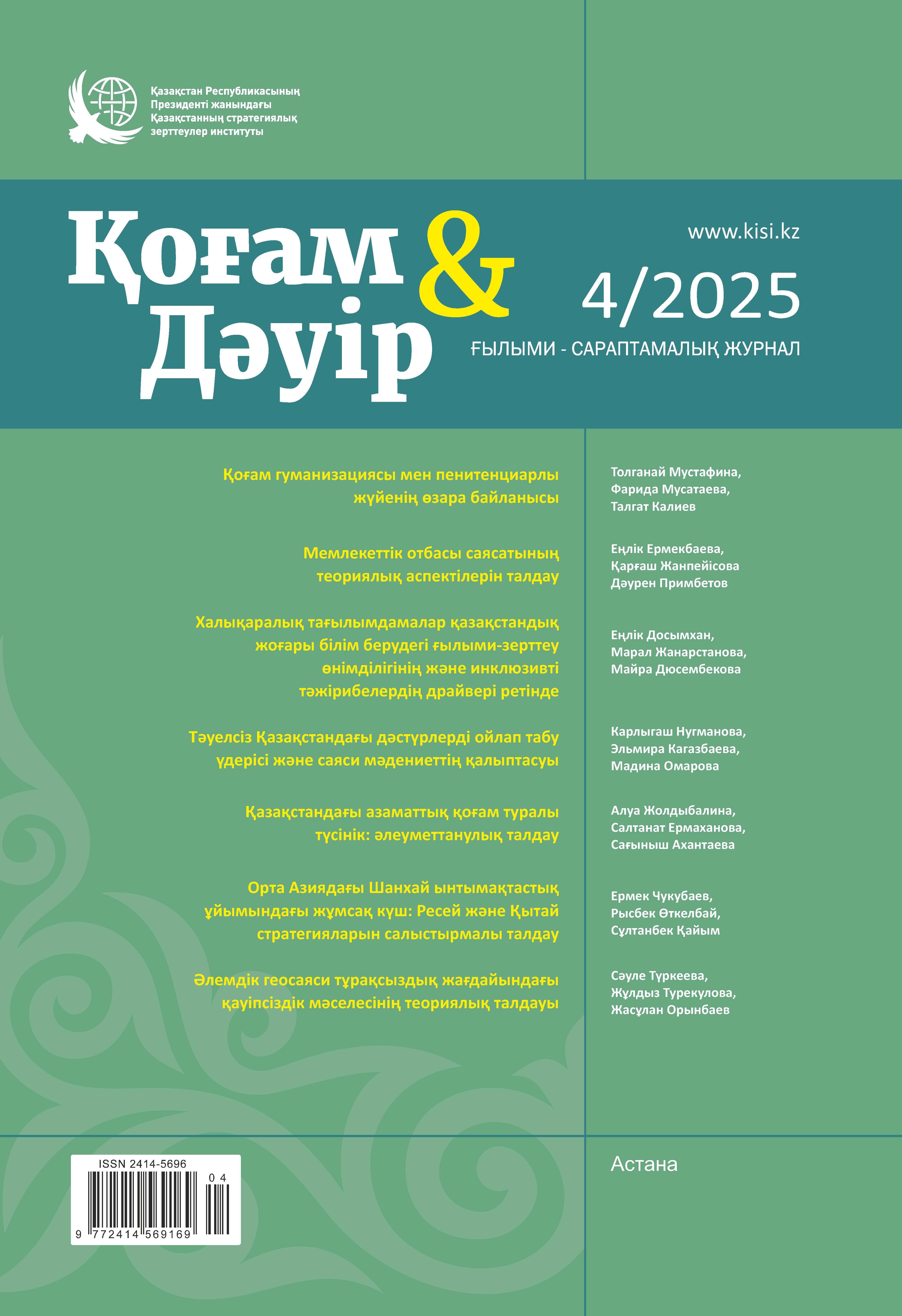
The article examines the humanization of Kazakhstan's penitentiary system based on international experience. The phenomenon of punishment is analyzed through the lens of Foucault and Agamben's ideas, and the penitentiary system is described as a social institution reflecting justice and humanism. The authors, by studying the «Mandela Rules» and domestic legislation, focus on the effectiveness of resocialization and rehabilitation programs, including initiatives such as «Philosophy in Prison».
The empirical part of the research incorporates a survey of inmates in Kazakh correctional facilities, assessing their perception of contemporary rehabilitation practices.
The study concludes that humanizing the penitentiary system requires active participation not only from state structures but also independent experts, civil activists, and broader civil society. The authors propose implementing educational programs to develop critical thinking skills among convicts. Such initiatives could facilitate successful reintegration and contribute to positive value-based transformation of society through penitentiary system humanization.